

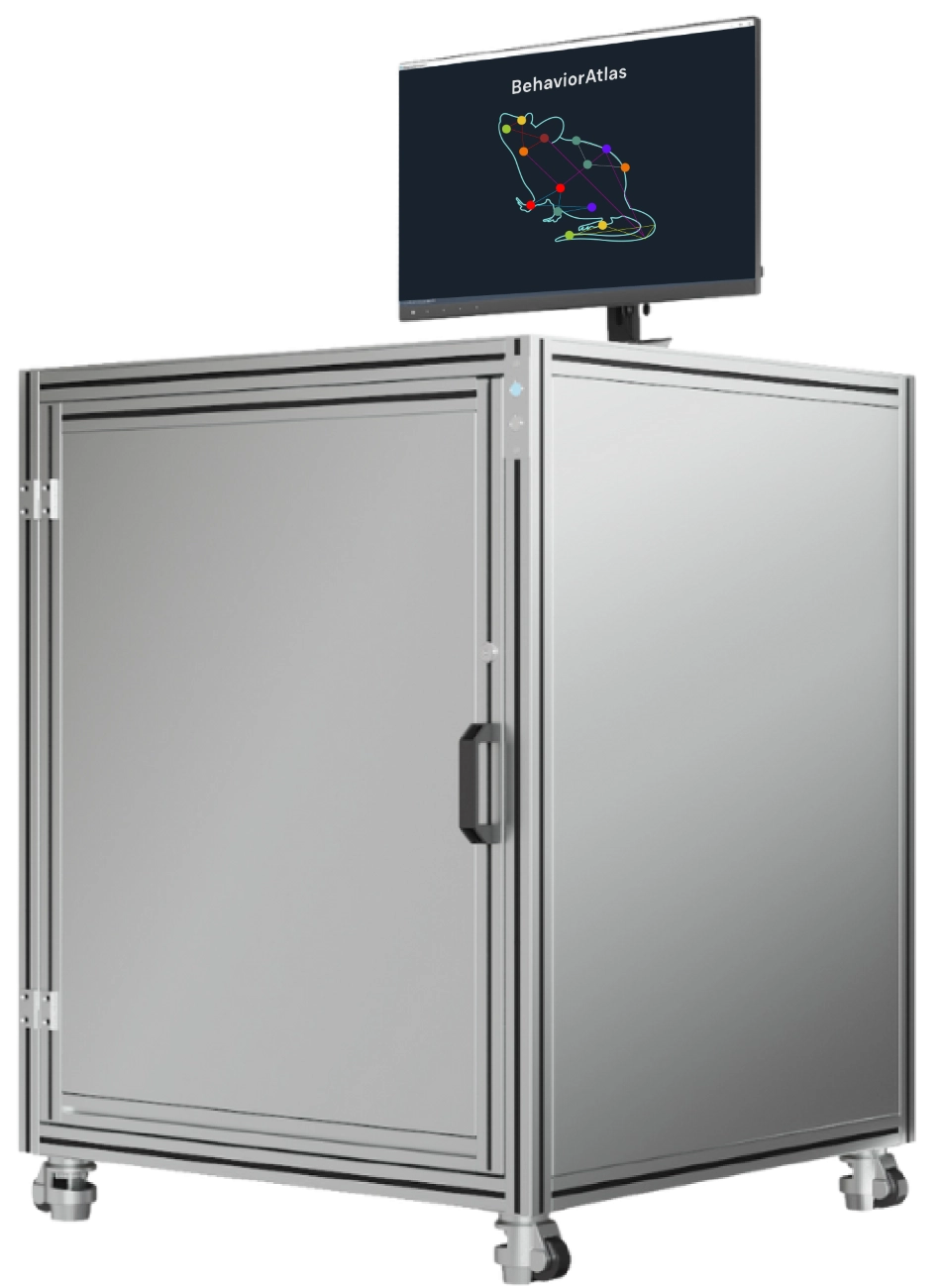
3D-AI BehaviorAtlas
The Next Generation 3D Markerless Animal Behavior Analysis System Powered by AI.
True 3D. True Insight. Powered by AI.
True 3D. True Insight. Powered by AI.
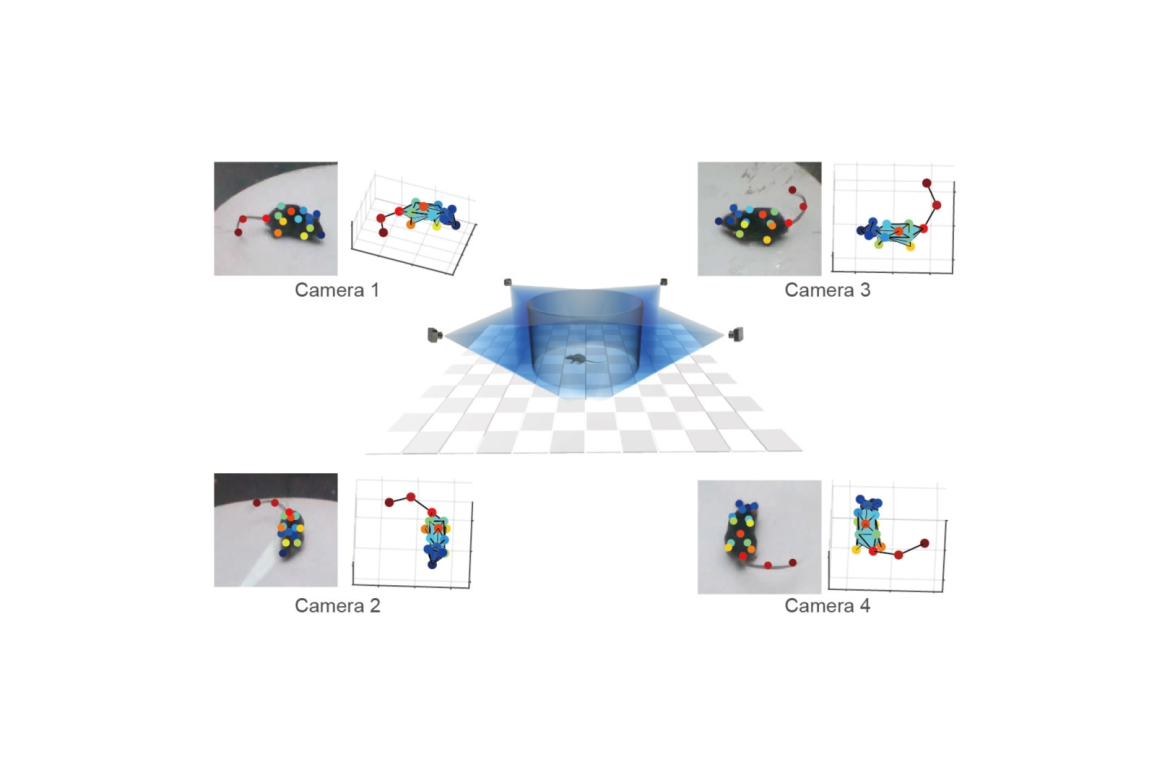
The BehavioralAtlas 3D-AI Animal Behavior Analysis System redefines behavioral phenotyping – delivering unmatched precision, reproducibility, and automation. Built on cutting-edge computer vision, machine learning, and neuroengineering, it captures true 3D skeletal trajectories by precisely identifying more than 16 anatomical points with a multi-camera setup and advanced software ecosystem.
Key highlights:
• Markerless, non-invasive tracking: Fully automatic 3D pose estimation with no physical markers or surgery.
• Deep behavioral phenotyping: AI-driven extraction of over 40 behavior subtypes, providing rich, publication-ready insights.
• Complete capture-to-insight workflow: Seamlessly integrates hardware, software, and analytics — from data acquisition through Behavioral Atlas Capture, Analyzer, and Explorer — enabling intuitive visualization, customizable metrics, and scalable experimental designs.
With BehavioralAtlas, you will gain true volumetric insight and automated analytics to accelerate discovery, enhance reproducibility, and push the frontiers of behavioral science.
3 Reasons to Choose 3D-AI BehaviorAtlas
- 4+ Cameras Tracking
Multi-view recording captures more details and features of animal behavior. - 16+ Body Points Identification
Accurately identify multiple parts of the animal’s body (more than 16 points). - 40+ Behavior Subtypes Extraction
Confidently identify action types such as walking, running, standing, scratching, sniffing, etc.
From Insight to Discovery: Watch BehavioralAtlas
BehaviorAtlas: A New Language for Understanding Animal Behavior
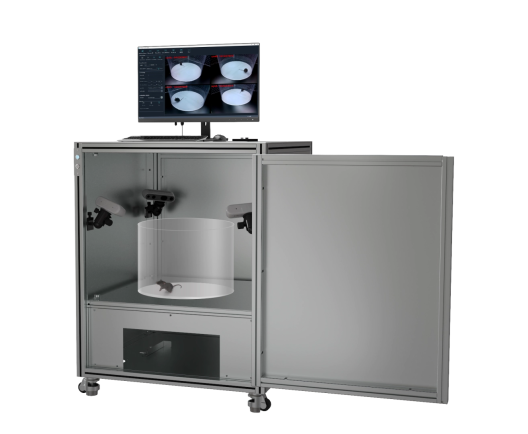
BehaviorAtlas is primarily a behavior decomposition framework inspired by the natural structure of animal behavior (Huang et al., Nature Communications, 2021). The system innovatively integrates three-dimensional behavior acquisition, hierarchical behavior decomposition, and behavior atlas construction technologies. It corresponds human language’s “letters-words-sentences” with animal behavior’s “posture-action-behavior spectrum”. This achieves the transformation of continuous, high-dimensional, and dynamic behavior parameters into quantifiable behavior parameters, overcoming the bottleneck of previous behavioral analysis systems that could only determine where animals were, but not what they were doing.
This framework can be seamlessly integrated into TSE Systems’ Multi Conditioning System with Open Field arena, enabling a powerful combination of precise behavioural tracking and flexible experimental conditioning. By embedding BehaviorAtlas into the Multi Conditioning setup, researchers can not only monitor spatial positioning and movement patterns but also decode complex behavioural sequences in real time. This integration enhances the interpretability of behavioral data, supports longitudinal studies across multiple conditioning paradigms, and opens new avenues for translational research in neuroscience, pharmacology, and behavioral genetics.
3D-AI Behavioral Analysis Workflow
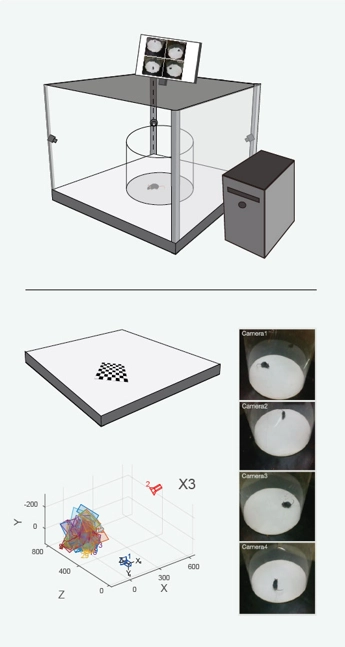
From capture to insight, the 3D–AI Behavioral Analysis Workflow delivers precise, rich behavioral data with minimal setup. It enables recording, analyzing, and exploring behavior fast, accurate, and easy.
1. Calibration & Aquisition
Multi-camera calibration is a critical step used to fuse, align, and reconstruct image data from multiple cameras.
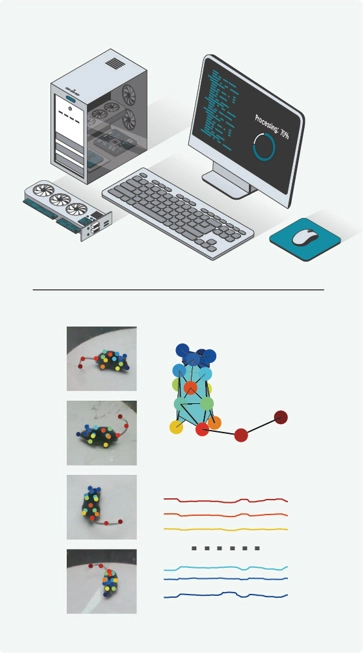
2. Data Processing
Multiple body points tracking, 3D skeletal reconstruction and subsequent extraction of behavioral parameters.
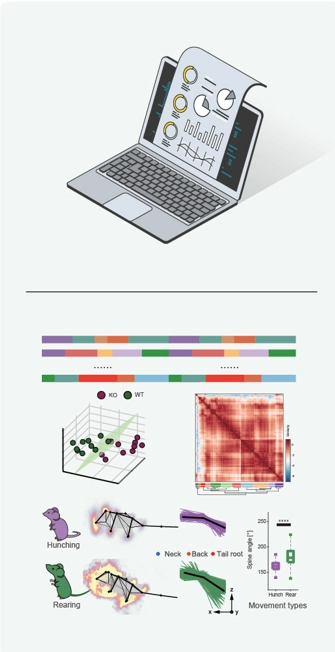
3. Behavior Visualization
Interactive preview and visualization of detailed animal behavior data, data analysis, data export, and chart export.
Neural circuit underlying individual differences in visual escape habituation.
Liu, X., Lai, J., Han, C., Zhong, H., Huang, K., Liu, Y., Zhu, X., Wei, P., Tan, L., Xu, F., & Wang, L. (2025). Neural circuit underlying individual differences in visual escape habituation. Neuron, 113(14), 2344-2357.e5. https://doi.org/10.1016/j.neuron.2025.04.018.
Hierarchical behavioral analysis framework as a platform for standardized quantitative identification of behaviors.
Ye, J., Xu, Y., Huang, K., Wang, X., Wang, L., & Wang, F. (2025). Hierarchical behavioral analysis framework as a platform for standardized quantitative identification of behaviors. Cell Reports, 44(2). https://doi.org/10.1016/j.celrep.2025.115239.
Mapping the behavioral signatures of shank3b mice in both sexes.
Liu, J., Ye, J., Ji, C., Ren, W., He, Y., Xu, F., & Wang, F. (2024). Mapping the Behavioral Signatures of Shank3b Mice in Both Sexes. Neuroscience Bulletin, 40(9), 1299–1314. https://doi.org/10.1007/s12264-024-01237-8.
The thalamic reticular nucleus orchestrates social memory.
Wang, F., Sun, H., Chen, M., Feng, B., Lu, Y., Lyu, M., Cui, D., Zhai, Y., Zhang, Y., Zhu, Y., Wang, C., Wu, H., Ma, X., Zhu, F., Wang, Q., & Li, Y. (2024). The thalamic reticular nucleus orchestrates social memory. Neuron, 112(14), 2368-2385.e11. https://doi.org/10.1016/j.neuron.2024.04.013.
A hierarchical 3D-motion learning framework for animal spontaneous behavior mapping.
Huang, K., Han, Y., Chen, K., Pan, H., Zhao, G., Yi, W., Li, X., Liu, S., Wei, P., & Wang, L. (2021). A hierarchical 3D-motion learning framework for animal spontaneous behavior mapping. Nature Communications, 12(1), 2784. https://doi.org/10.1038/s41467-021-22970-y.